



Have you ever noticed tiny spots of missing paint on your car’s bonnet, bumper or doors after driving on a busy road? These marks are commonly known as stone chips. Although they may look like minor cosmetic defects, they can expose the underlying layers of your vehicle’s paintwork to moisture, dirt and corrosion.
Stone chips often happen when small stones, gravel and road debris strike your vehicle while driving. Even a relatively new car can develop these imperfections, particularly around the front bumper, bonnet and wheel arches.
Fortunately, stone chip repair can restore the affected area and help protect your vehicle’s exterior. Depending on the size and depth of the damage, you may be able to use a suitable touch-up paint product or require professional refinishing.
In this guide, we explain what causes stone chips, how to repair small paint chips on your car and when professional assistance makes more sense.
What Is Stone Chip Damage?
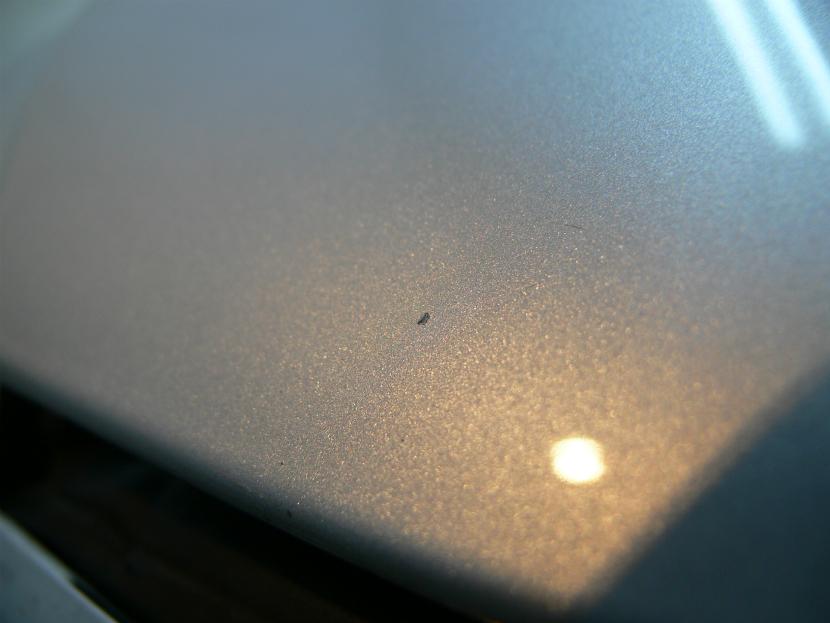
Stone chip damage occurs when small stones or other road debris hit a vehicle’s exterior with enough force to remove part of its paint coating. The impact can damage different layers of automotive paint, including the clear coat, coloured base coat and primer. In more severe cases, the impact exposes the bare metal underneath.
Your vehicle’s paintwork does more than improve its appearance. It also provides an important protective barrier against environmental damage.
According to Volvo’s vehicle maintenance guidance, paint plays an important role in protecting the vehicle against rust. Therefore, repairing stone chips promptly helps preserve both the appearance and condition of your car.
What Causes Stone Chips on Cars?
Several everyday driving conditions can cause stone chips. Some of the most common include:
1. Loose Stones and Gravel
Driving behind other vehicles on gravel roads or poorly maintained surfaces increases the chances of stones striking your car. Tyres can throw loose debris into the air, where it hits exposed body panels.
2. Motorway and High-Speed Driving
At higher speeds, even small pieces of road debris can strike your vehicle with considerable force. The front bumper and bonnet are particularly vulnerable.
3. Construction and Roadworks
Roadworks often leave loose stones, sand and other materials on the road. Passing through these areas can expose your vehicle to additional paint damage.
4. Following Other Vehicles Too Closely
Not maintaining enough distance behind another vehicle increases your exposure to debris thrown up by its tyres. Keeping a reasonable following distance can help reduce the likelihood of stone chips.
Why Is Stone Chip Repair Important?
A small paint chip may not seem urgent, but ignoring it can create bigger problems. Here are some reasons to consider repairing paint chips as soon as possible.
- Preventing Rust and Corrosion
When a stone chip exposes bare metal, moisture and oxygen can reach the surface and encourage corrosion. Over time, rust may spread beneath the surrounding paint.
The Motor Ombudsman identifies stone chips that remove paintwork as one possible cause of surface corrosion.
- Maintaining Your Car’s Appearance
Multiple chips can make an otherwise attractive vehicle look worn or poorly maintained. Repairing these imperfections helps restore a cleaner, more consistent finish. - Protecting Resale Value
Visible paint damage can affect a buyer’s perception of a vehicle’s condition. Keeping the exterior in good shape helps create a better impression when selling or trading in your car. - Avoiding More Extensive Repairs
Addressing a small chip early may prevent the need for more extensive preparation and refinishing if corrosion or paint deterioration develops.
How to Fix Small Paint Chips on Your Car
The right repair method depends on how serious the damage is. Very small chips may respond well to touch-up paint, while larger or deeper defects need professional attention. Here are the general steps involved in repairing minor stone chips.
Step 1: Clean the Damaged Area
Start by washing the affected section with automotive shampoo and clean water. Remove dirt, road grime and loose particles.
Dry the surface thoroughly with a clean microfibre cloth. Applying paint over dirt or moisture can affect adhesion and the final appearance.
Step 2: Inspect the Depth of the Chip
Examine the damaged area carefully. Determine whether the impact has affected only the clear coat, reached the coloured paint layer or exposed the primer or bare metal.
This assessment helps determine whether the repair needs polishing, primer or touch-up paint.
Step 3: Prepare the Surface
Remove any loose paint around the damaged spot. Avoid aggressive sanding because it can enlarge the affected area. If corrosion is already present, do not simply cover it with fresh paint. The rust needs proper treatment before refinishing.
Step 4: Apply the Appropriate Primer
If the impact has exposed bare metal, an appropriate automotive primer helps prepare the surface for paint. Plastic bumper damage may require a suitable adhesion promoter or plastic primer instead.
Always follow the product manufacturer’s instructions.
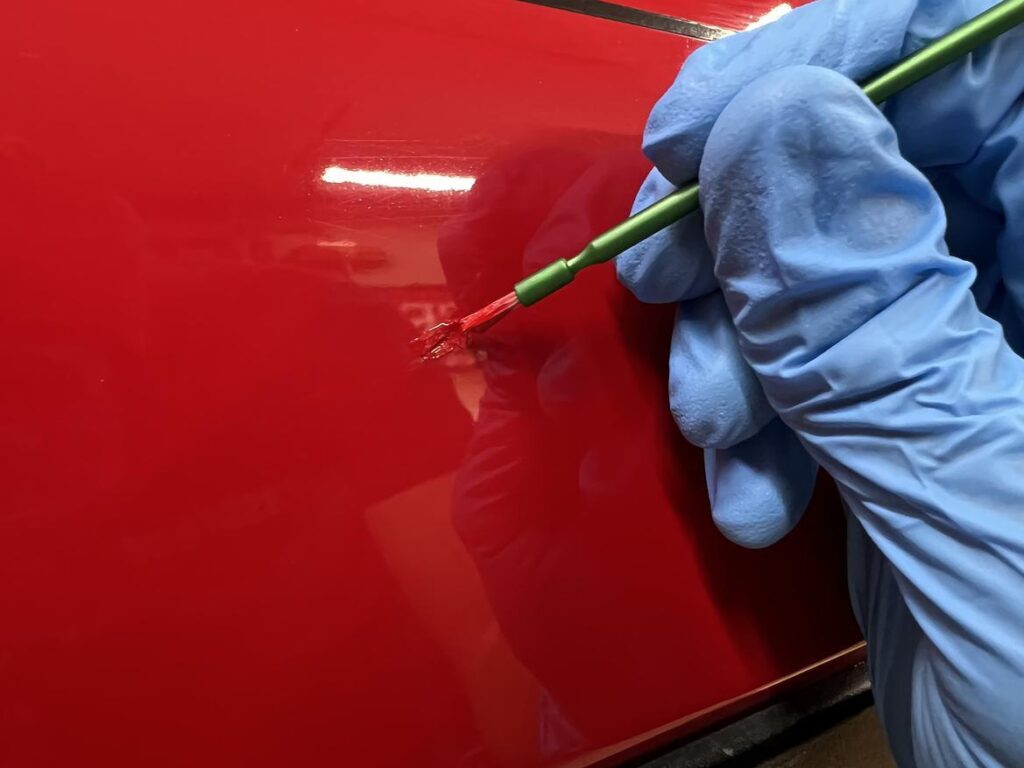
Step 5: Apply Matching Touch-Up Paint
Use the correct paint colour for your vehicle. You can usually find the paint code on a manufacturer’s identification label, although its location varies by model.
Apply thin layers rather than one thick coat. Allow each layer to dry as directed before adding another.
Step 6: Apply Clear Coat and Finish
Where the paint system requires it, apply a suitable clear coat to protect the new finish. Allow the repair to cure according to the manufacturer’s recommendations. Avoid polishing or washing the area too early.
For manufacturer-specific guidance, see Volvo’s instructions for repairing minor paint damage.
DIY Stone Chip Repair vs Professional Repair
Should you repair stone chips yourself or take your car to a professional body shop? Both options have their place. The right choice depends on the size, depth and location of the damage, as well as the finish you expect.
A DIY repair may suit a small, isolated chip. However, professional stone chip repair offers better control over surface preparation, colour matching and paint application.
Comparison Table: DIY vs Professional Stone Chip Repair
| Feature | DIY Stone Chip Repair | Professional Stone Chip Repair |
|---|---|---|
| Cost | Generally lower | Depends on damage |
| Equipment | Basic repair kit | Professional equipment |
| Colour Matching | Depends on paint accuracy | Professional colour matching |
| Finish Quality | May leave visible marks | More consistent finish |
| Deep Paint Chips | Limited suitability | Better suited |
| Rust Treatment | Requires appropriate skills | Professional preparation |
| Best For | Very small chips | Deeper or multiple chips |
When Should You Choose Professional Stone Chip Repair?
Not every paint chip requires a complete panel respray. However, certain situations call for professional assessment. Consider visiting a body repair specialist if:
- The chip has exposed bare metal.
- Several chips appear across the bonnet or bumper.
- Rust or bubbling has developed around the damaged area.
- Previous touch-up attempts have left uneven paint.
- The affected area is large or has multiple layers of damage.
- Your vehicle has a specialist or matte paint finish.
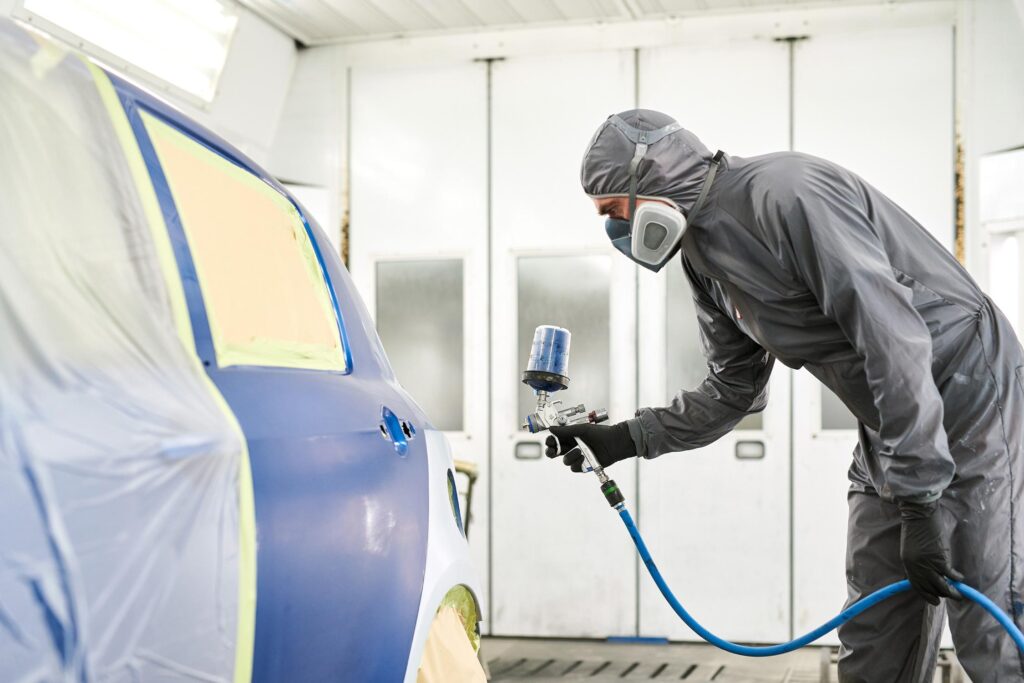
A professional technician can assess the damage and recommend the most suitable repair method. Depending on the condition of the paintwork, the solution may involve localised refinishing, blending or repainting an affected panel.
For more information about related paintwork problems, read our guide to professional car scratch repair.
How Can You Prevent Stone Chips on Your Car?
Although stone chips are difficult to avoid completely, a few simple habits can reduce the risk. Maintain a safe following distance: Avoid driving too closely behind vehicles, especially trucks and other heavy vehicles.
- Drive carefully on gravel roads: Reduce your speed when travelling through loose gravel, construction areas and poorly maintained roads.
- Consider paint protection film: Paint protection film provides a physical barrier against small stones and road debris. It can be particularly useful on vulnerable areas such as the bonnet and front bumper.
- Wash your car regularly: Regular cleaning removes dirt and contaminants that can affect the paintwork.
- Inspect your paintwork: Check the bonnet, bumper and wheel arches periodically. Early detection makes it easier to address minor damage before it worsens.
For additional advice, read our article on professional car rust treatment.
Frequently Asked Questions About Stone Chip Repair
1. Can small stone chips be repaired without repainting the entire car?
Yes. Small, isolated chips can often be repaired using suitable touch-up paint. Larger areas may require localised refinishing or repainting of the affected panel.
2. How much does stone chip repair cost?
The cost depends on the number of chips, their depth, their location and the repair method required. A professional assessment is the best way to obtain an accurate quotation.
3. Will stone chips cause rust on my car?
They can. When a chip exposes bare metal, moisture and oxygen can contribute to corrosion. Prompt repair helps protect the exposed area.
4. Can I use a touch-up paint pen to repair stone chips?
Yes, a compatible touch-up paint pen can work for very small chips. However, correct colour selection and surface preparation are essential for a satisfactory result.
5. How long does stone chip repair take?
Small touch-up repairs may take relatively little time, although drying and curing can extend the process. Larger repairs involving preparation, priming and refinishing take longer.
6. Is stone chip repair worth it?
Yes. Repairing small chips helps maintain your vehicle’s appearance, protects exposed surfaces and may prevent more extensive paintwork damage.
Restore Your Car’s Paintwork with Modus Car Body Repairs
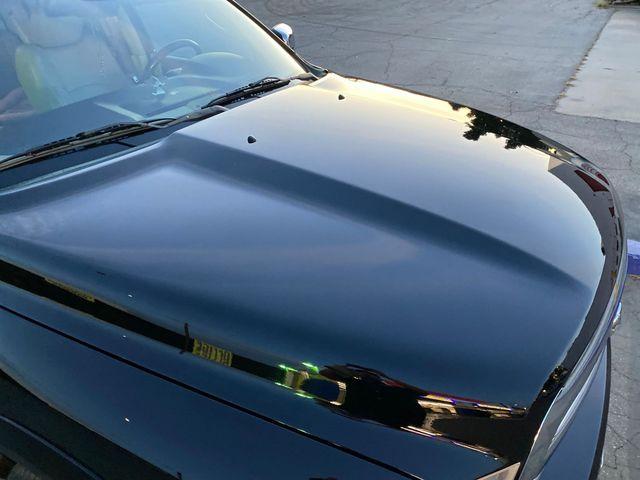
Small stone chips can make a noticeable difference to your vehicle’s appearance, especially when they begin to accumulate across the bonnet, bumper and other exposed panels.
The good news is that early attention can help prevent minor paint damage from developing into a more serious problem. Whether your car has a single chip or several areas of damaged paintwork, Modus Car Body Repairs can help assess the damage and recommend an appropriate repair solution.
Our team provides professional car body and paint repair services in Luton and Bedfordshire, with attention to quality finishes and colour matching. Don’t allow small paint imperfections to become bigger problems.
Contact Modus Car Body Repairs today for a free, no-obligation quotation and let us help restore your vehicle’s finish.
– Website: moduscarbodyrepairs.com
– Telephone: 0330 133 3180
– Location: 2 Taylor Street, Luton, LU2 0EY.
Leave a Comment